Do You Need a Guide for Mount Toubkal?
What trekkers should know about guides, safety, navigation, seasonal conditions and planning the climb from Imlil — written by a licensed local guide based in the High Atlas.
Mount Toubkal rises to 4,167 metres — the highest mountain in Morocco and North Africa — and most climbs begin in the village of Imlil, in the Aït Mizane Valley. The standard summer route is a sustained high-altitude walk rather than technical climbing, and that fact leads many trekkers to ask a reasonable question: do I actually need a guide?
The honest answer has two parts. First, access and guiding requirements around Mount Toubkal can change, so trekkers should confirm the current rules before departure rather than relying on outdated information. Second — and this is the part I see most often from Imlil — the question of whether a guide is legally required and the question of whether a guide is practically sensible are two different questions, and they deserve separate answers.
I guide on this mountain regularly, and this article is written from that direct experience. It is not a route guide, and it is not a sales pitch. The aim is to give you a balanced picture so you can make your own decision based on your experience, your season, and the kind of trek you want.
Can You Climb Mount Toubkal Without a Guide?
It helps to separate three things that often get confused: what may be legally or administratively required, what is technically possible, and what is practically sensible.
Legally or administratively, access and guiding requirements can change, and I will not state a fixed rule here unless the current position is verified. Check with a local guide or the relevant authorities before you travel rather than relying on forum posts that may be years out of date.
Technically, the standard summer route from Imlil to the summit is a long, sustained walk on a generally well-defined path. In good conditions, an experienced trekker with strong navigation, altitude experience and their own logistics can complete the trek. It is not a technical climb in summer.
Practically, the picture is more nuanced. An experienced independent trekker and a first-time mountain visitor have very different risk profiles. Altitude, route-finding in poor visibility, weather changes, refuge logistics and winter conditions all add layers of complexity that go beyond whether the path is followable on a clear day. For many trekkers, a local guide is the difference between a smooth summit day and a difficult one — not because the mountain is impossible alone, but because local knowledge removes the variables that turn a long walk into a problem.
Why Many Trekkers Use a Local Guide
The practical reasons for using a local guide on Toubkal are straightforward, and none of them require the mountain to be dangerous. A guide simply handles the things that are hard to assess from a distance:
- Route knowledge — the path is generally clear in summer, but local guides know the variations, shortcuts and alternatives that matter when conditions change.
- Current trail conditions — snow state, washed-out sections and refuge access can shift between your booking date and your trek date.
- Weather awareness — reading the mountain on the day is a skill built from experience, not a forecast app.
- Pacing and altitude management — a guide sets a sustainable pace and watches for altitude symptoms that trekkers often miss in themselves.
- Refuge logistics — booking, food, mules and timing are arranged, so you carry a daypack and focus on the walk.
- Local communication — language and local relationships smooth the stages that independent trekkers often find friction-heavy.
- Winter conditions — snow and ice change the mountain entirely, and local winter experience is far more valuable than in summer.
- Emergency decision-making — the judgement to turn around, change the plan, or call for help is easier with someone who has done it before.
- Cultural knowledge — the villages, shrines and Amazigh life along the route have meaning that a local guide can open up.
None of this means a guide eliminates all risk. The mountain remains a serious undertaking with or without one. What a guide does is reduce the number of things you have to manage yourself, and bring local judgement to the decisions that matter most.
Is the Mount Toubkal Route Easy to Follow?
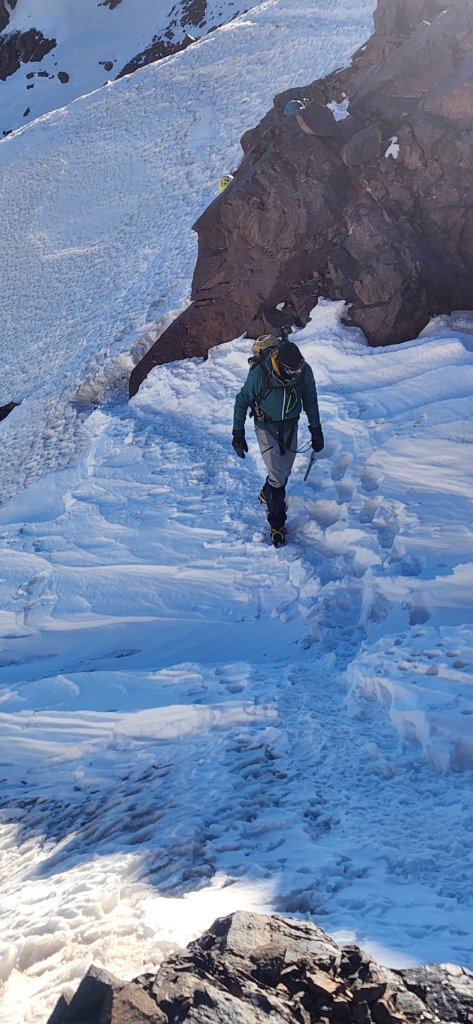
The standard route follows a clear line: Imlil → Aroumd → Sidi Chamharouch → Toubkal Refuge → summit. In good summer weather the path is generally well-defined and widely walked, which is part of why experienced trekkers can manage it independently. In poor visibility, snow, or on the upper scree slopes above the refuge, the line is less obvious — and that is where local knowledge earns its value.
For the full route — stages, altitudes, timings and difficulty — see our guide to the Mount Toubkal trek from Imlil. The lower part of the approach is also described in our guide to the Sidi Chamharouch hike from Imlil.
What Can Go Wrong Without Local Knowledge?
This is not about fear. It is about the specific things I have seen on this mountain over the years, most of which are preventable with experience:
- Wrong turns — the route has junctions, especially in the upper valley and above the refuge, where the wrong path costs time and energy.
- Poor pacing — going too fast too early is the most common reason people struggle at altitude, and it is hard to judge from inside the effort.
- Dehydration — the dry air and strong sun mean trekkers underestimate water loss, especially in summer.
- Altitude symptoms — headache, nausea and dizziness can affect anyone, and recognising them early is easier with experience.
- Sudden weather deterioration — a clear morning can turn to cloud and wind on the summit ridge within hours.
- Snow and ice outside summer — shoulder seasons and winter bring conditions that the summer route does not prepare you for.
- Late arrival at the refuge — a slow start or wrong turn can mean reaching the refuge in the dark or cold.
- Poor turnaround decisions — the hardest judgement on any mountain is knowing when to abandon a summit attempt, and it is easier with local experience.
None of these are extreme mountaineering scenarios. They are the ordinary things that turn a long day into a difficult one, and they are exactly what a local guide is there to manage.
Does Mount Toubkal Require Technical Climbing Skills?
In normal dry-season conditions, the standard route does not require technical climbing skills. It is a physically demanding high-altitude walk with sustained ascent, not a rock or ice climb. The challenge comes from the length of the days, the altitude, and the conditions — not from rope work or technical movement.
Winter changes this fundamentally. Snow and ice settle on the upper slopes and often on the approach, and the route may require crampons, an ice axe and the skills to use them safely. The winter mountain is a different undertaking from the summer one, and the equipment and experience required are different too.
For a full assessment of the physical and technical demands, our article on whether Toubkal is difficult covers fitness, altitude and who the trek suits. For the seasonal picture that determines what kind of mountain you will face, see our best time to climb Mount Toubkal guide.
Do You Need a Guide in Winter?
Winter on Toubkal is substantially more demanding than summer, and the case for local guidance is correspondingly stronger. Snow and ice cover the upper mountain, crampons and an ice axe become necessary when conditions require them, and route visibility can disappear entirely in cloud or fresh snow.
Conditions also change through a winter day in ways that summer trekkers do not face. A guide who knows the mountain in winter reads the snow, the weather and the timing differently — and the margin for error is much smaller. We will cover winter ascents in detail in a separate dedicated article, but the short version is this: if you are asking whether you need a guide for winter Toubkal, the answer is almost certainly yes.
Guide vs Independent Trekking: Who Is Each Option For?
Neither option is inherently better. The right choice depends on your experience, your season, and how much of the logistics and decision-making you want to carry yourself.
| Consideration | With a local guide | Independent |
|---|---|---|
| Navigation | Local route knowledge; reads the trail in all conditions | Self-navigation required; route is generally clear in summer but less so in poor visibility or snow |
| Logistics | Help with refuge booking, mules, food, timing | Organised independently; refuge availability and transport arranged by the trekker |
| Local conditions | Current information on snow, trail state and weather | Must research independently; conditions can change between booking and departure |
| Winter | Strongly benefits from mountain expertise and equipment handling | Requires appropriate winter mountaineering experience and own gear |
| Cultural context | Local interpretation of villages, shrines and Amazigh life | Limited unless the trekker has local knowledge |
| Flexibility | Can adapt pace, route and turnaround decisions on the day | Complete self-management; all decisions rest with the trekker |
| Emergency response | Local contacts, evacuation knowledge, communication | Self-reliance; own insurance and emergency planning required |
Independent trekking is a legitimate choice for experienced, well-equipped mountain walkers who are confident in their navigation and altitude management. It is not a lesser option — it is simply a different allocation of responsibility.
How Much Does a Mount Toubkal Guide Cost?
The cost of a guided Mount Toubkal trek varies with several factors, and it is not a single fixed figure. Price depends on:
- the duration of the trek — two days, three days, or longer acclimatisation approaches
- group size — private treks cost more per person than shared arrangements
- the season — winter guiding with specialist equipment is priced differently from summer
- inclusions — transport, refuge nights, meals, mule support and equipment all affect the total
- whether the arrangement is private or shared with other trekkers
Rather than give an invented price range here, the most useful thing is to ask a locally based operator directly with your dates and group size. For the full cost breakdown — guide, refuge, meals, transport and equipment — see our dedicated guide to the Mount Toubkal trek cost.
How to Choose a Guide for Mount Toubkal
If you decide to use a guide, a few practical checks help you choose well:
- Appropriate credentials — look for a licensed local mountain guide with the relevant regional qualifications, and confirm what is currently required.
- Familiarity with Toubkal — the mountain has specific conditions and route variations that local experience matters for.
- Clear inclusions — refuge, meals, transport, mules and equipment should be spelled out before you commit.
- A realistic itinerary — be cautious of anyone promising an unrealistically fast ascent or a guaranteed summit regardless of conditions.
- Communication before the trek — a good guide answers your questions clearly in advance and discusses conditions honestly.
- Winter experience — if you are trekking in winter, ask specifically about snow and ice experience, not just summer guiding.
- Transparent price — the quote should reflect what is included, with no vague extras appearing later.
- Emergency judgement — the willingness to turn around is more important than the willingness to push for a summit.
- Local knowledge — a guide based in Imlil or the surrounding valleys knows the route and the community in a way that a city-based operator may not.
The best guides are not the ones who promise the most — they are the ones who give you an honest picture of the mountain and adapt the plan to the day.
Starting the Trek from Imlil
Imlil is the main gateway to Mount Toubkal and the starting point for the standard route. Most trekkers reach Imlil from Marrakech — our guide to getting from Marrakech to Imlil covers the transport in detail. The full route from the village is described in our Mount Toubkal trek from Imlil guide.
How Many Days Should You Allow?
The classic trek is normally done over two days, with an overnight at the refuge. Some trekkers add a third day for a more relaxed pace or better acclimatisation. The choice is mostly about comfort and fitness rather than season, though winter can slow every stage. For the detail, see our article comparing the Mount Toubkal trek in two or three days.
What Should You Bring?
What you carry depends heavily on the season — summer calls for sun protection and hydration, while winter requires crampons, an ice axe and serious insulation. Rather than duplicate the list here, our complete guide on what to pack for the Toubkal trek covers gear for every season, including winter equipment.
Plan Your Mount Toubkal Trek with a Local Guide
Morocco Elite Guide is based locally in Imlil, and we arrange guided Mount Toubkal trekking adapted to the season, the current conditions and your group's fitness and experience. If you prefer not to organise the route, the refuge and the logistics yourself, we can arrange the trek locally from Imlil — with a licensed local guide who handles navigation, pacing, refuge booking and the judgement calls that make the difference on a summit day.
Frequently Asked Questions
Do you need a guide for Mount Toubkal?
Whether a guide is legally required depends on the current access rules, which can change, so trekkers should confirm the position before departure. In practical terms, most people choose to climb with a licensed local guide because the route is long, high, and subject to changing mountain conditions — even though the standard summer route is not technical climbing.
Can you climb Mount Toubkal independently?
Experienced, well-prepared trekkers do climb Toubkal independently, and the summer route is generally followable in good conditions. Independent trekking still requires solid navigation, altitude management, refuge logistics and your own emergency planning. First-time visitors and anyone unsure of the conditions are usually better served by a local guide.
Is Mount Toubkal technically difficult?
In normal dry-season conditions the standard route is not technical climbing — it is a sustained, high-altitude walk. Winter changes the mountain fundamentally, with snow, ice and mountaineering equipment. Physical fitness and altitude tolerance matter more than climbing skills in summer.
Is a guide more important in winter?
Yes. Winter on Toubkal involves snow, ice, crampons and an ice axe when conditions require them, along with route-finding challenges in poor visibility. The margin for error is much smaller, and local mountain expertise becomes far more valuable than in summer.
Can beginners climb Mount Toubkal?
A reasonably active person who walks regularly can often manage the trek in good non-winter conditions, but it is not a gentle first hike. Fitness, altitude tolerance and the right season all matter. A guide is particularly valuable for first-time visitors who are unfamiliar with altitude and mountain decision-making.
How do I find a guide in Imlil?
Guides are available locally in Imlil, the main trailhead village. The most reliable approach is to arrange a guide in advance through a locally based operator, so that credentials, inclusions, refuge logistics and price are clear before you travel rather than negotiated at the trailhead.
Does a Toubkal guide arrange the refuge?
In most guided arrangements, the guide or their operator handles refuge booking, food and mule support. This is one of the practical benefits of using a local guide — the logistics of the overnight stay are arranged for you, and you carry only a daypack on the summit day.
How many days do you need for Mount Toubkal?
The classic trek is normally done over two days, with an overnight at the refuge. Some trekkers add a third day for a more relaxed pace or better acclimatisation. The choice does not change much with the season, though winter conditions can slow every stage.
Related guides:
- → Mount Toubkal Trek from Imlil
- → Is Toubkal Difficult?
- → Best Time to Climb Mount Toubkal
- → Mount Toubkal Trek: 2 Days or 3 Days
- → What to Pack for the Toubkal Trek
- → Sidi Chamharouch Hike from Imlil
- → Marrakech to Imlil: Distance, Transport & How to Get There
- → 3-Day Mount Toubkal Trek from Marrakech
- → Explore all Atlas Mountains tours