The real answer to whether you can summit Jebel Toubkal (4,167m) — written by a guide who has led over 50 summit attempts and knows exactly where most people struggle.
By Hamid · Licensed Toubkal Guide·9 min read
Planning to visit the Atlas Mountains?
Choose the Atlas day trip that fits your pace — private or small-group. Message Hamid Bouredda directly — he's a licensed local Amazigh guide (No. 1380) born and raised in Imlil. Honest local advice, no middleman.
Reply in minutes · No obligation · Direct with your guide
Quick Answer
"Toubkal is not technically difficult — but altitude makes it harder than it looks on paper. With proper acclimatisation and a realistic fitness level, most motivated hikers can reach the summit."
The key variables: your fitness base, how well you acclimatise, the season, and whether you have an experienced guide reading the mountain. Most summit failures are from going too fast, too soon — not from lack of ability.
I'm Hamid. I've guided treks on Toubkal in summer heat and winter ice. I've watched fit runners struggle at 3,800m and older travelers float to the summit on their first high-altitude attempt. The mountain doesn't respect gym fitness. What it rewards is patience, pacing, and preparation.
Here is my most honest breakdown of what makes Toubkal challenging — and who it's genuinely achievable for.
From my experience guiding travelers in the Atlas Mountains, including over 50 Toubkal summit attempts, the mountain rewards patience and preparation far more than raw fitness. If you're not yet ready for Toubkal, an Atlas Mountains day trip from Marrakech is the perfect first step. And if you are weighing up whether to trek independently or with a local guide, our article on whether you need a guide for Mount Toubkal covers that question in detail.
The Real Challenges of Climbing Toubkal
🏔️
The main challenge
Altitude
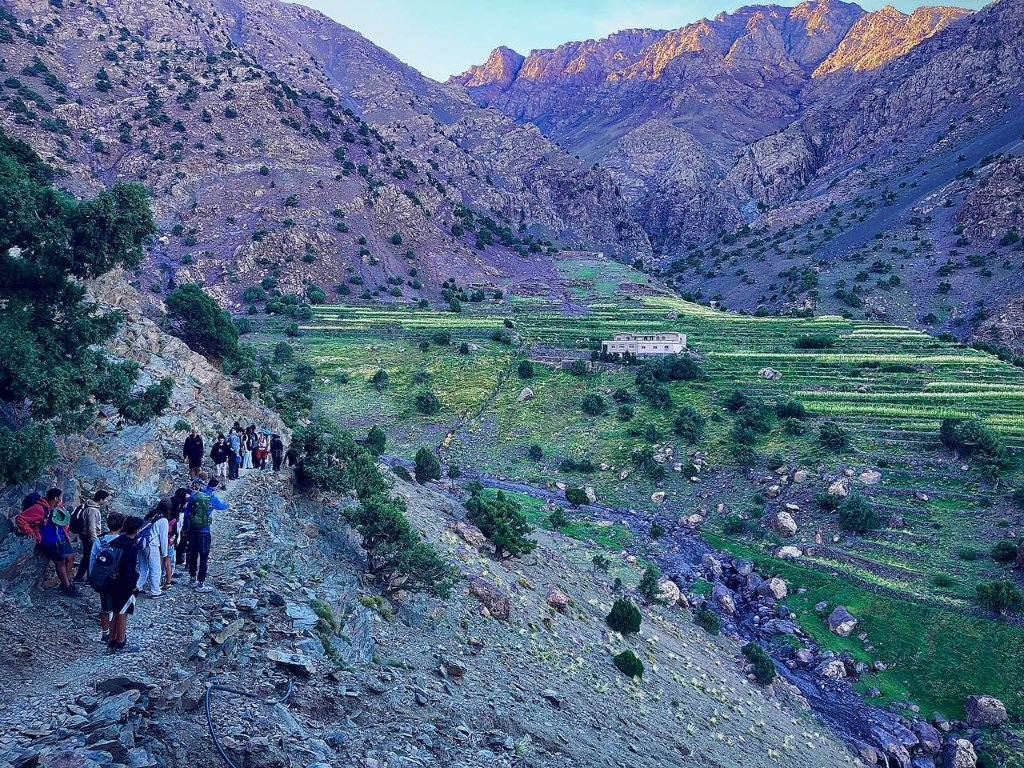
At 4,167m, Toubkal sits above the threshold where altitude sickness becomes a real risk. Symptoms — headache, nausea, fatigue, dizziness — can affect anyone, regardless of fitness level. This is why acclimatisation days in Imlil (1,740m) and at the refuge (3,200m) are not optional — they're essential.
🪨
Physically demanding
The Summit Scree
The final 1,000m from the Toubkal Refuge to the summit is relentless loose scree — two steps forward, one step back. It's not technically difficult, but it's exhausting. Trekking poles are strongly recommended. Most hikers take 3–4 hours for this section.
📏
Manageable with pacing
Distance & Duration
The full Toubkal ascent from Imlil involves approximately 18km and 2,400m of elevation gain over two days. This is within reach for recreational hikers but requires consistent pacing and energy management. Hamid sets a sustainable pace — not race-walking.
❄️
Technical — requires specialist gear
Winter Conditions
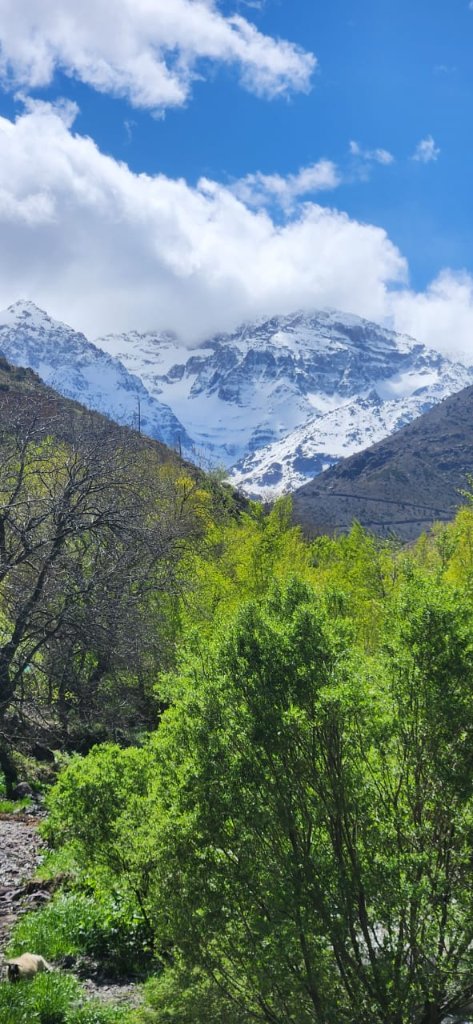
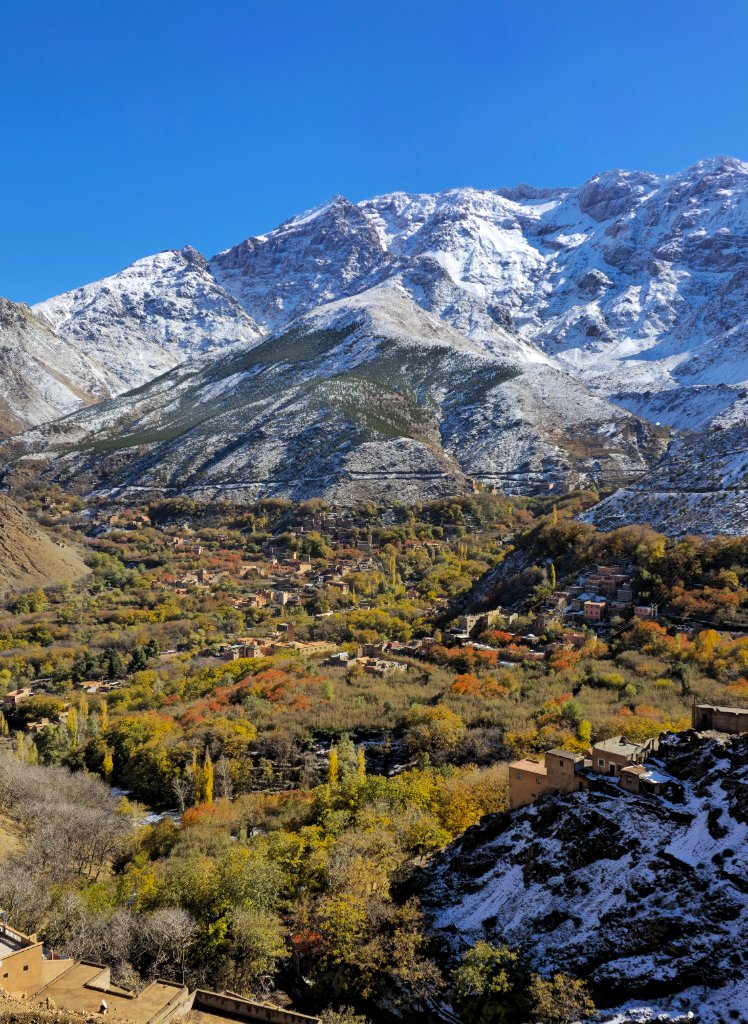
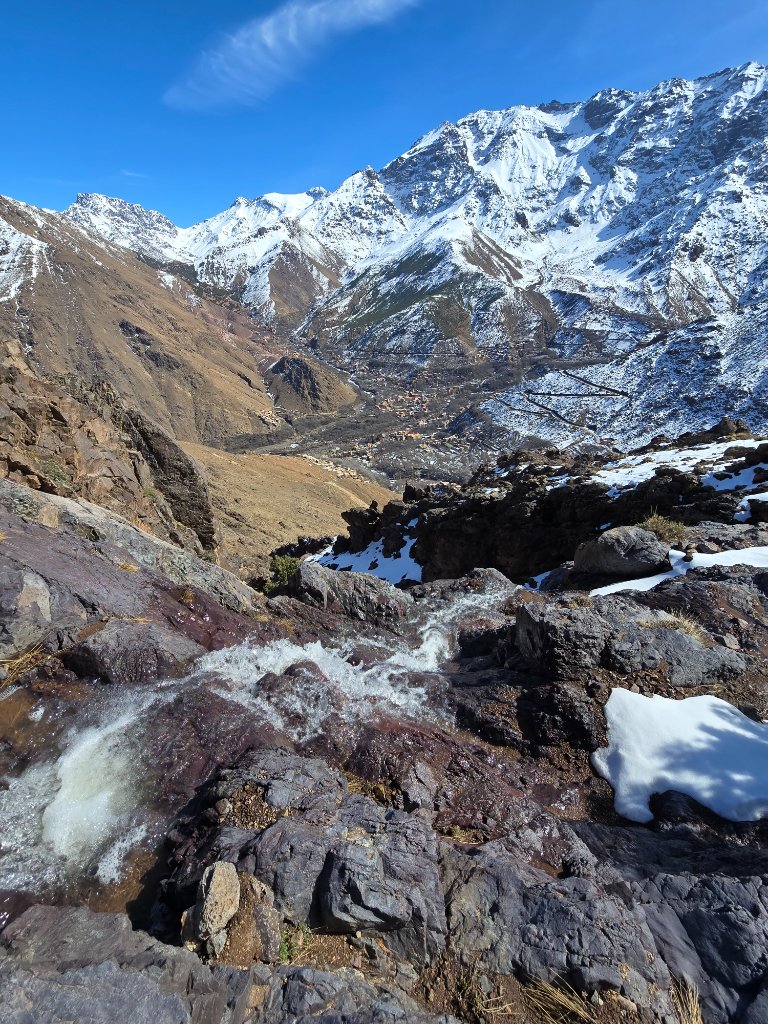
In winter (November–March), Toubkal requires crampons, ice axe, and experience using them. The summit becomes a genuine mountaineering objective. Summer (May–October) is non-technical — solid boots and trekking poles are sufficient for the summit approach.
If you don't hike regularly and have never been above 2,000m, the Toubkal summit is likely too ambitious. The altitude alone causes problems for the unacclimatised — independent of fitness. The ascent from the refuge to the summit gains 1,000m in under 5km on steep scree.
Hamid's recommendation: Start with the Tasghimout day hike (2,700m) or the 2-day Atlas trek. Build altitude experience first.
Recreational Hikers
Possible with proper preparation
If you walk regularly (several times per week), have done day hikes with 600–800m elevation gain, and are comfortable in mountain terrain, Toubkal is achievable with a 6-day itinerary that includes proper acclimatisation nights. You need to be honest about your fitness.
Hamid's recommendation: The 6-day Toubkal circuit with Hamid is designed for this level — two acclimatisation days before the summit attempt.
Experienced Trekkers
Well within reach
If you've completed multi-day mountain hikes, are comfortable at 2,500–3,000m, and have strong trail fitness, Toubkal is a challenging but completely manageable mountain. Most experienced trekkers rate it 7/10 in difficulty — tiring but not technical (in summer conditions).
Hamid's recommendation: The 6-day circuit is perfect. You'll have time to enjoy the journey rather than just survive it.
Easier than Mont Blanc (which requires technical climbing skills), broadly similar in challenge to Kilimanjaro if done properly with acclimatisation. The main similarity with Kilimanjaro is that altitude, not technical difficulty, is the primary challenge. The main difference: Toubkal is shorter and more accessible.
What fitness level do I need for Toubkal?
You should be able to comfortably hike 5–6 hours with 600–700m elevation gain before attempting Toubkal. If you can do this without significant distress, you have the base fitness. The limiting factor for most people is altitude, not pure fitness.
Can I do Toubkal in one day from Marrakech?
Technically possible but strongly not recommended. The one-day ascent from Imlil involves a 3:30am start, 18km, and over 2,400m of elevation gain with no acclimatisation. The failure and altitude sickness rate for one-day attempts is high. A 6-day circuit with acclimatisation nights is the right approach.
Do I need a guide for Toubkal?
Officially, no — Toubkal is not a restricted peak. In practice, navigating the approach, managing altitude symptoms, and making summit/turn-around decisions is far safer with an experienced local guide. Hamid has led over 50 Toubkal summits and knows when conditions or a client's state require turning back. For a full breakdown of the question — what may be required versus what is practically sensible — see our guide on whether you need a guide for Mount Toubkal.
What if I can't make the summit?
Hamid never pushes clients to summit if conditions or physical state suggest otherwise. The Toubkal Refuge at 3,200m is already a significant achievement. Many 'failed summit' attempts result in the most memorable mountain experiences — a storm-watch from the refuge, a sunrise from the valley. The mountain is never wasted.
Is Toubkal dangerous?
In summer (May–October), Toubkal is not dangerous for prepared hikers with an experienced guide. The risk of altitude sickness exists but is manageable with proper acclimatisation. In winter, the objective hazards (ice, avalanche risk on approaches) make it a serious mountaineering undertaking requiring appropriate gear and skills.